
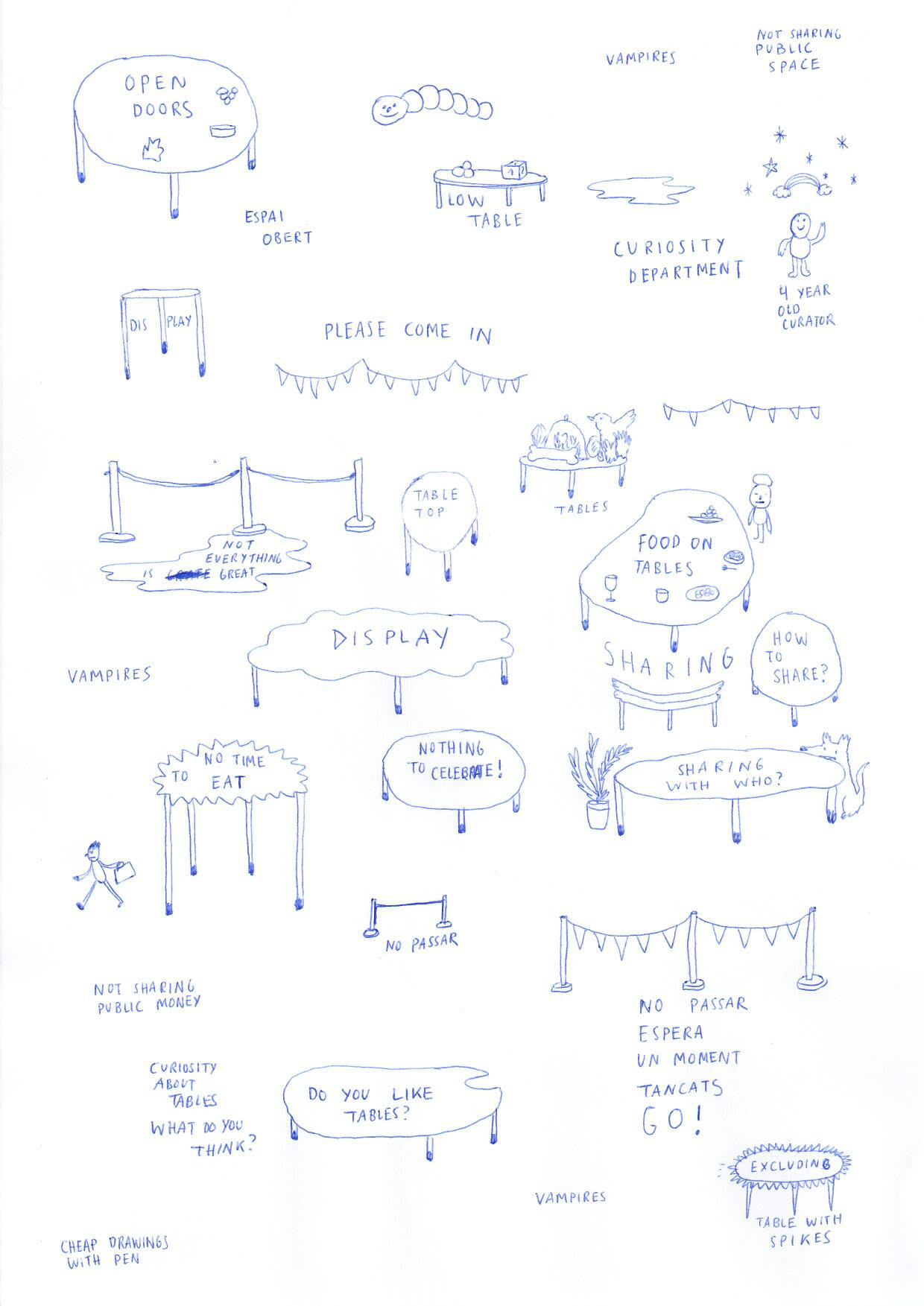
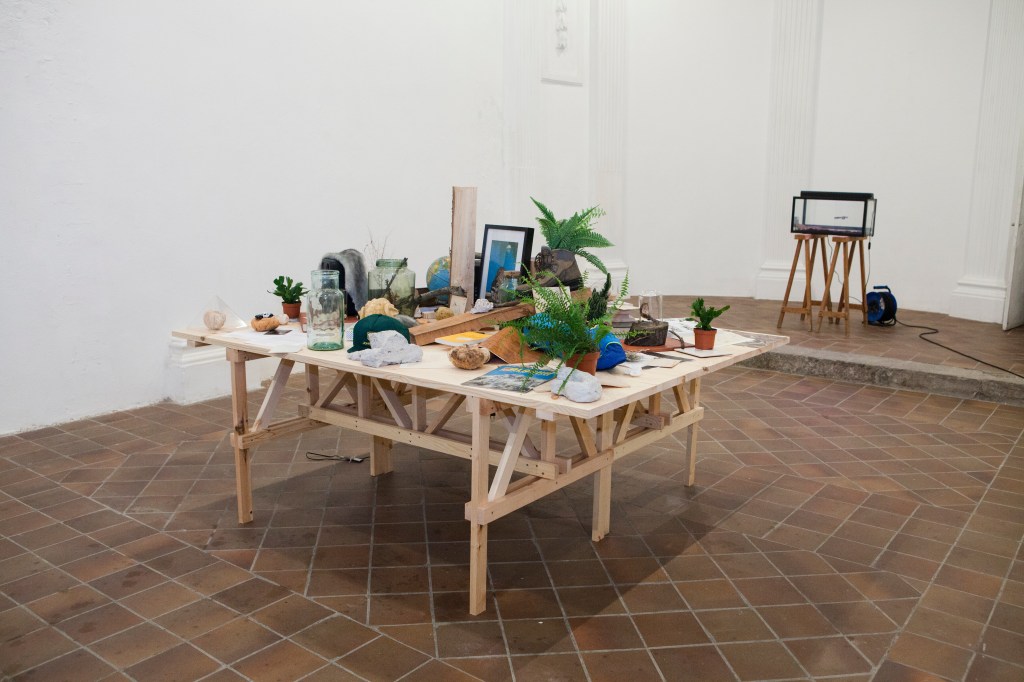
“Recerca sobre taules” és un projecte de llarg recorregut que connecta diferents treballs que he realitzat, com “Com perdre’s a Alaska” a la Capella de Sant Roc el 2017, l’espai Fireplace al Poblenou amb l’artista Ángela Palacios, o “Cow, Bull, Cattle” a Askeaton, Irlanda, també el 2017. La taula ha esdevingut un fil conductor en aquesta recerca, centrada en els espais de l’art i les formes d’habitar-los i de relacionar-s’hi. Aquest projecte indaga sobre les maneres en què utilitzem, construïm i habitem els nostres espais culturals, artístics i museístics. Posant el focus en la taula, sorgeixen preguntes sobre els cossos que transiten aquests espais, sobre la seva accessibilitat i també sobre els ecosistemes humans i no humans que els envolten.
engl/
“Research on Tables” is a long-term project that connects various works I have done. The table has become a guiding thread in my research, which explores art spaces and how we inhabit and relate to them. This project delves into the ways we use, build, and occupy our cultural, artistic, and museum spaces. By focusing on the table, questions arise about the bodies that move through these spaces, their accessibility, and the human and non-human ecosystems that surround them.

engl/
Tables have played various roles throughout the history of museums. They can be seen both as display models and as workspaces. They also occupy a central place in the imagination of domestic spaces, especially in Western culinary culture. For example, the artist collective Nyamnyam, composed of Iñaki Álvarez and Ariadna Rodríguez, explores these concepts in their project “a quatre potes” with Pedro Pineda, based on the idea that before sharing a meal or working, one must first build a table to sit at.
The first scientific research clubs, which later transformed into public museums, began with tables as workspaces. When these spaces were opened to the public to conserve and protect objects, the famous display case was added. The table is, in a way, the cousin of the pedestal, which elevates the object to a certain height and, thus, to a higher status in the eyes of the viewer.
Therefore, the design of the table as an analog, museological, and social technology is by no means devoid of anthropological, historical, or political content. One only needs to analyze, for example, which cultures dine at a table and what type, or who is allowed to sit at certain tables and at what times.
Cat/
Les taules transiten per la història dels museus de diverses maneres. Es poden veure tant com a models d’expositor com a espais de treball. També són objectes que ocupen un lloc central en l’imaginari dels espais domèstics, especialment en la cultura culinària occidental. Per exemple, el col·lectiu d’artistes Nyamnyam, format per Iñaki Álvarez i Ariadna Rodríguez, explora aquests conceptes en el projecte “a quatre potes” amb Pedro Pineda, partint de la idea que, abans de compartir un àpat o treballar, cal construir una taula per seure-hi.
Els primers clubs d’investigadors científics, que es van transformar en museus oberts al públic, van començar amb la taula com a espai de treball. Quan aquests espais es van obrir al públic per conservar i protegir objectes, es va afegir la famosa vitrina. La taula és, d’alguna manera, cosina germana de la peanya, que eleva l’objecte a una altura, i, per tant, també d’estatus davant la mirada de l’espectador.
Així doncs, el disseny de la taula com a tecnologia analògica, museística i social no està en absolut buit de contingut antropològic, històric o polític. Només cal analitzar, per exemple, quines cultures mengen a taula i de quin tipus, o qui pot seure a quines taules i en quins moments.








 Quim Packard