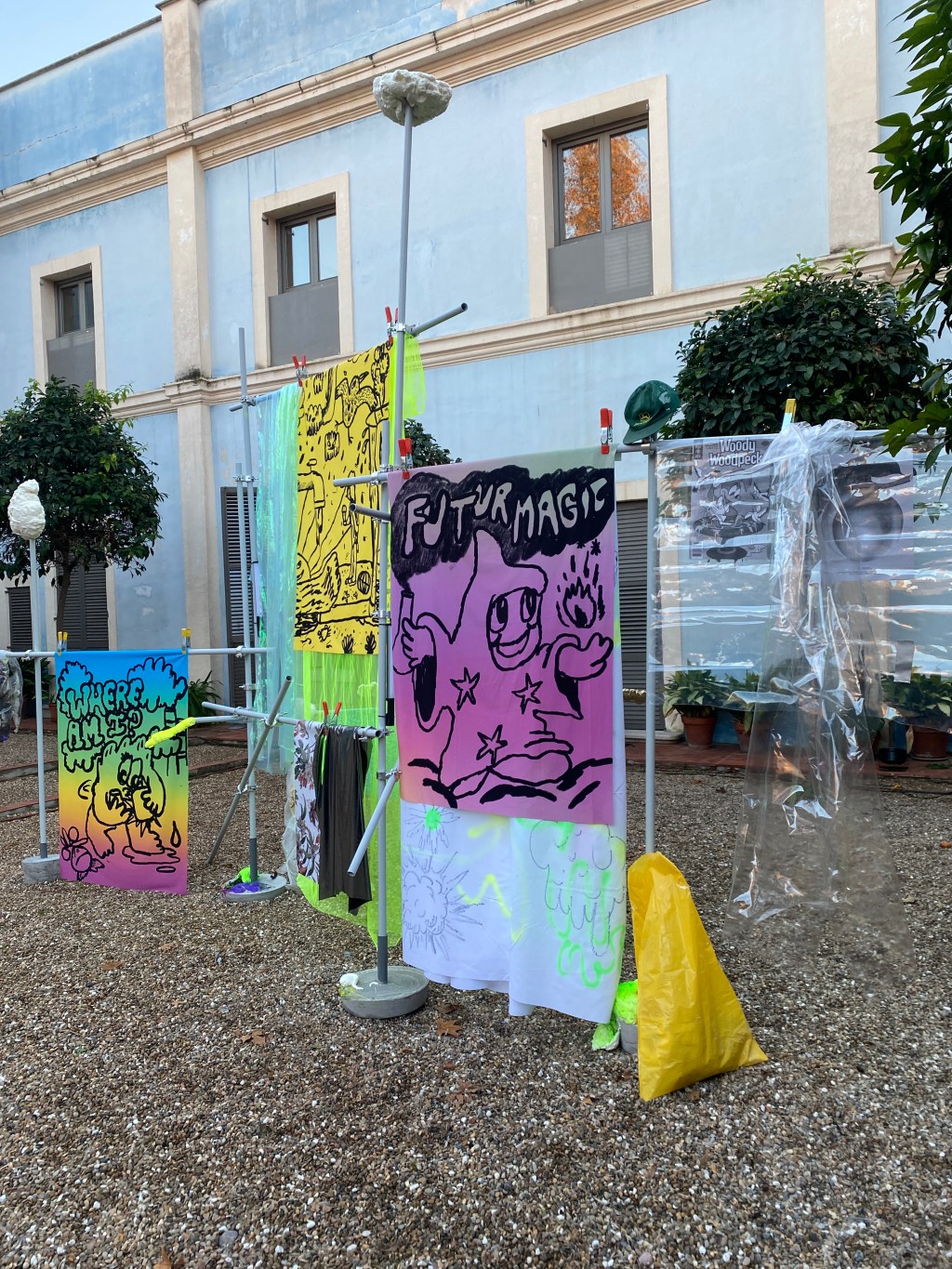
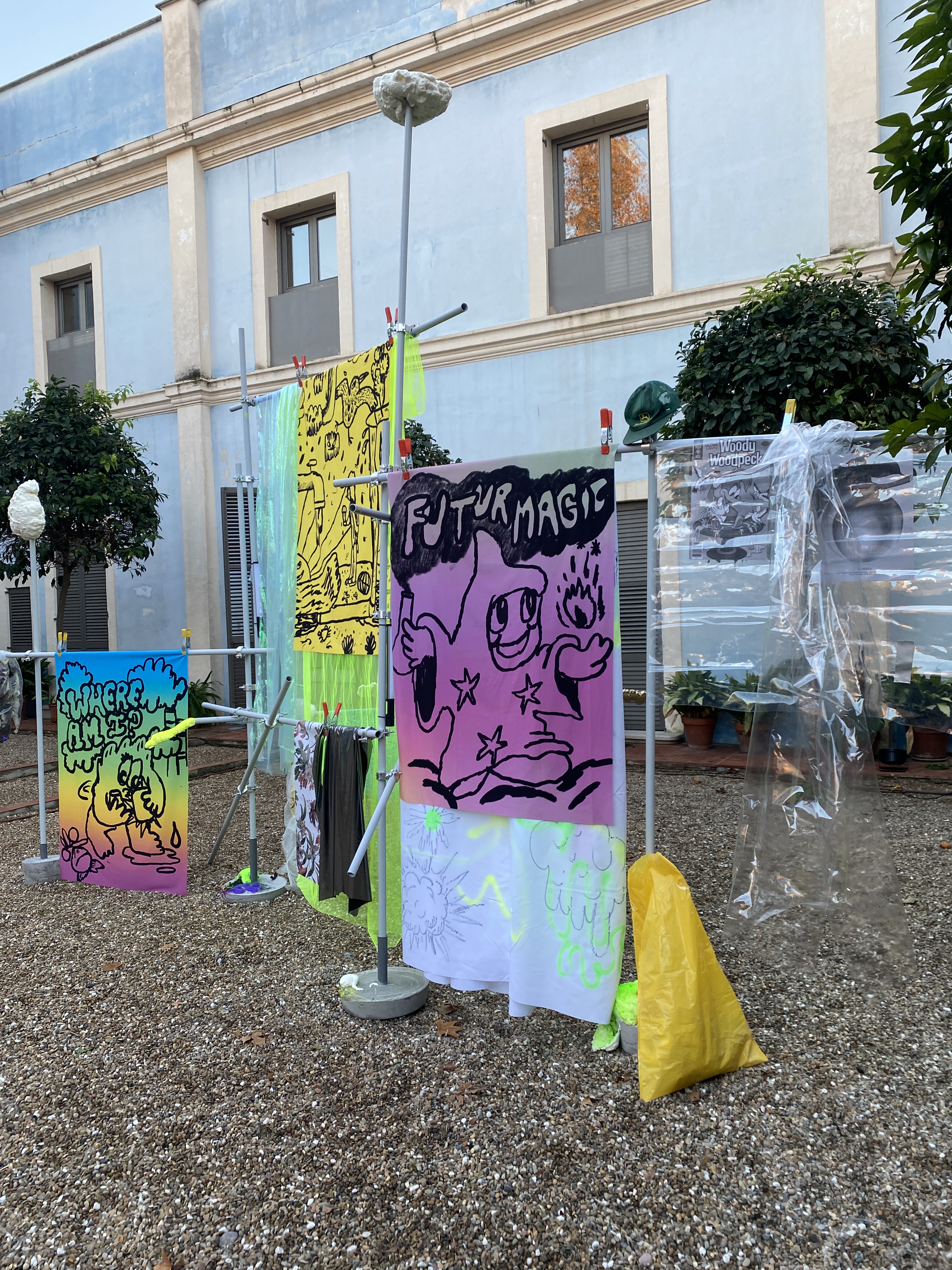
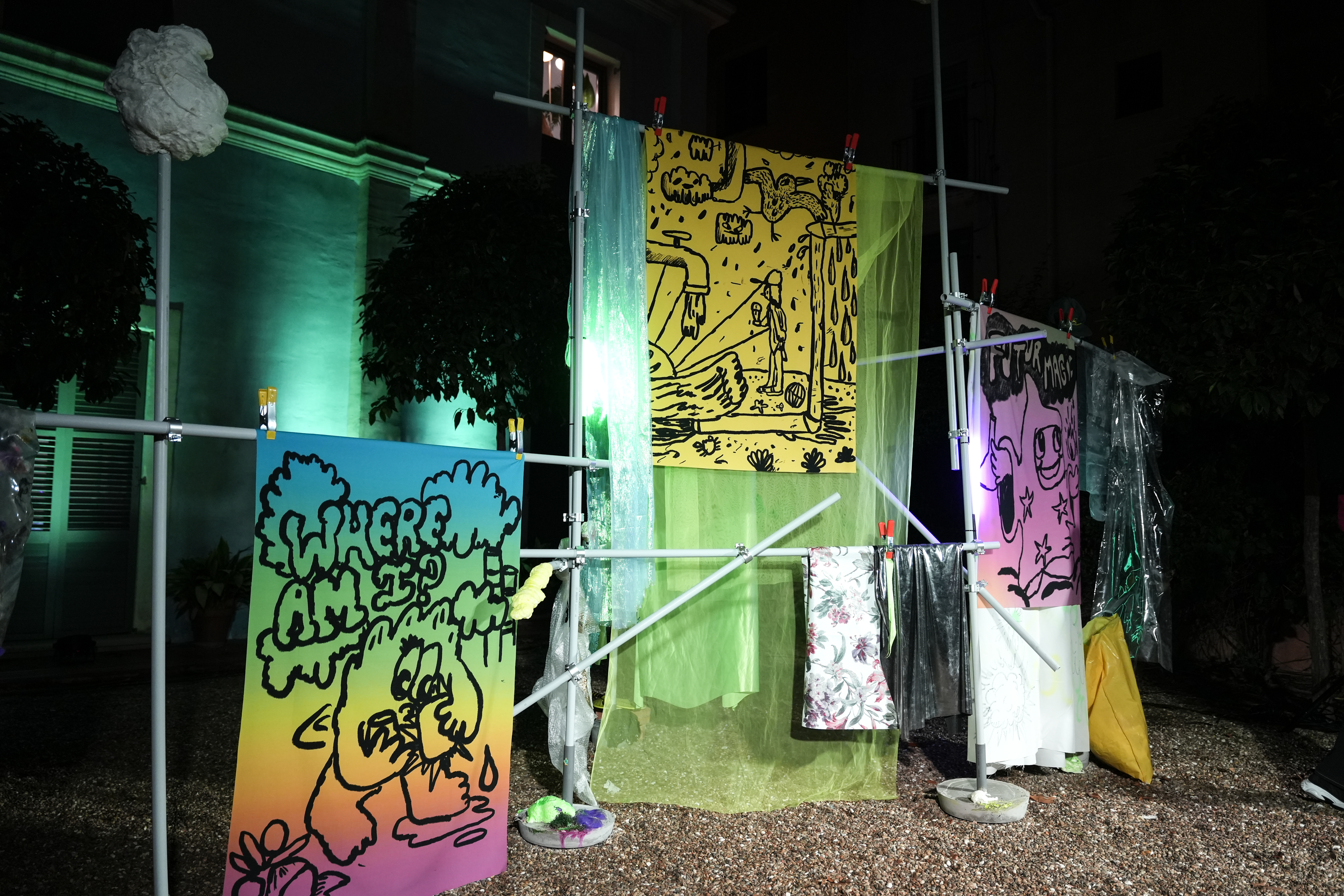
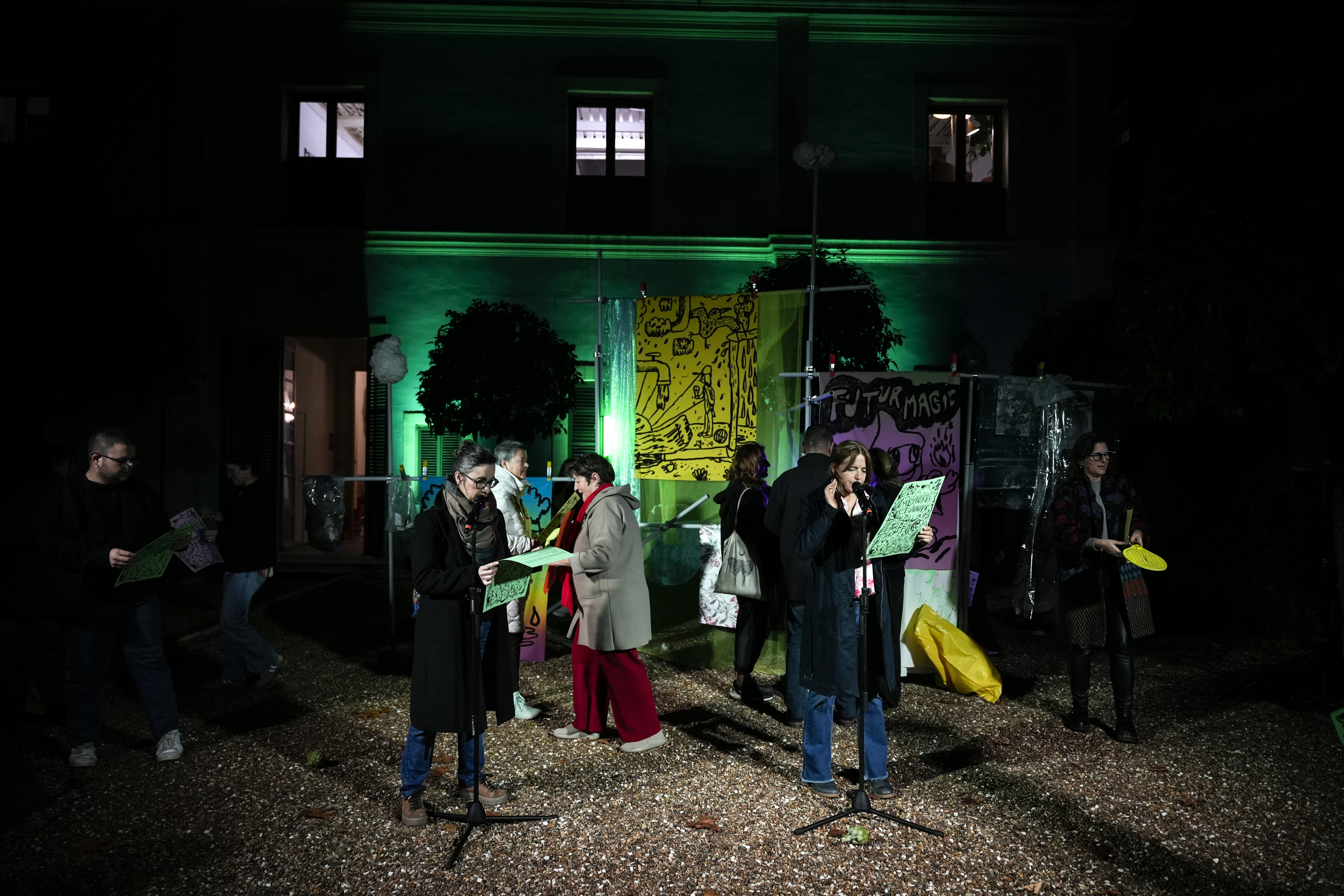
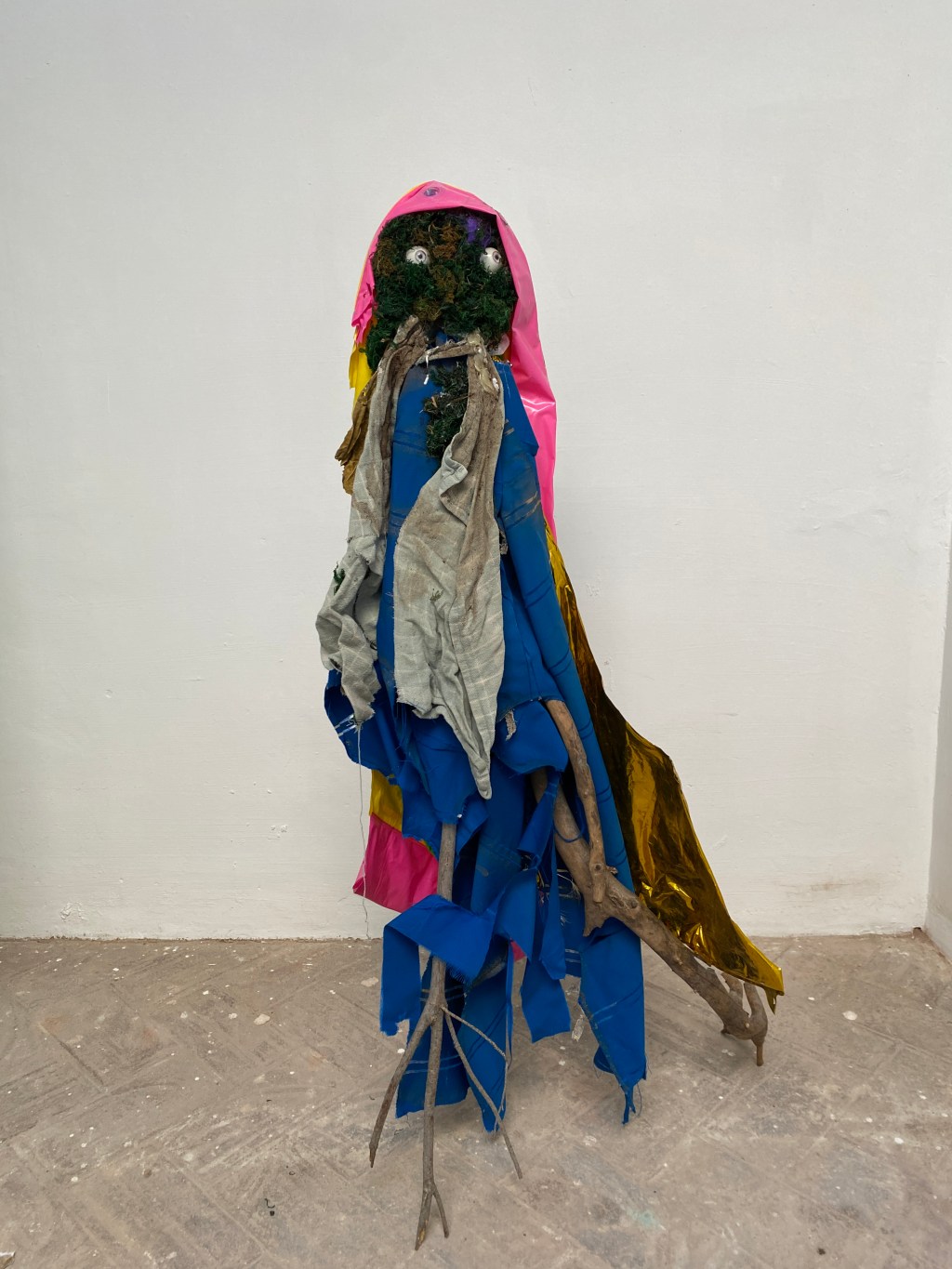
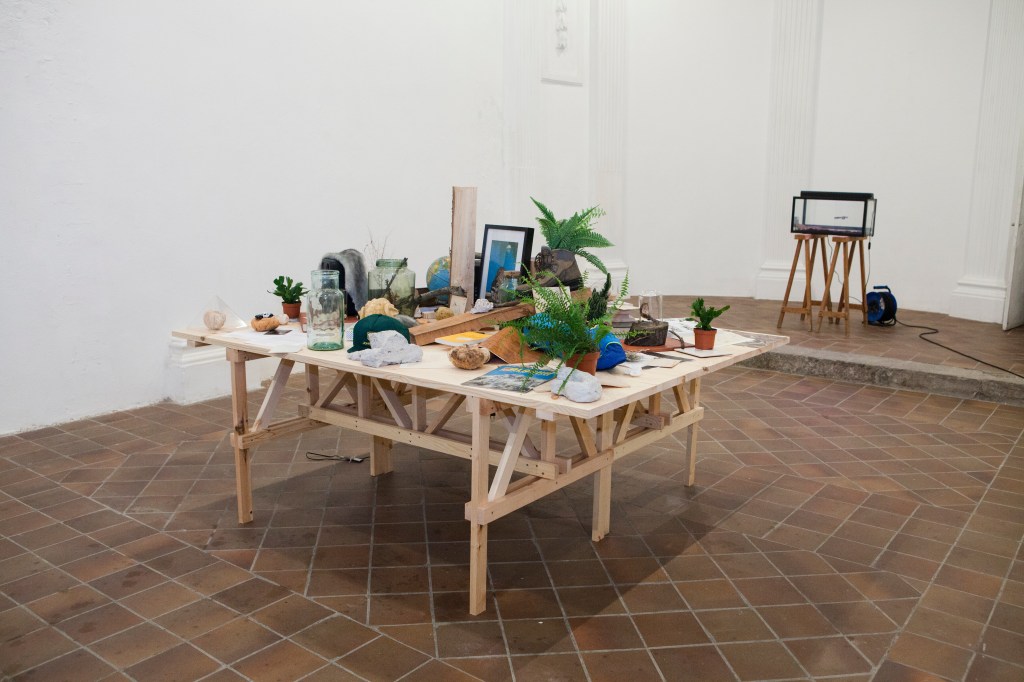
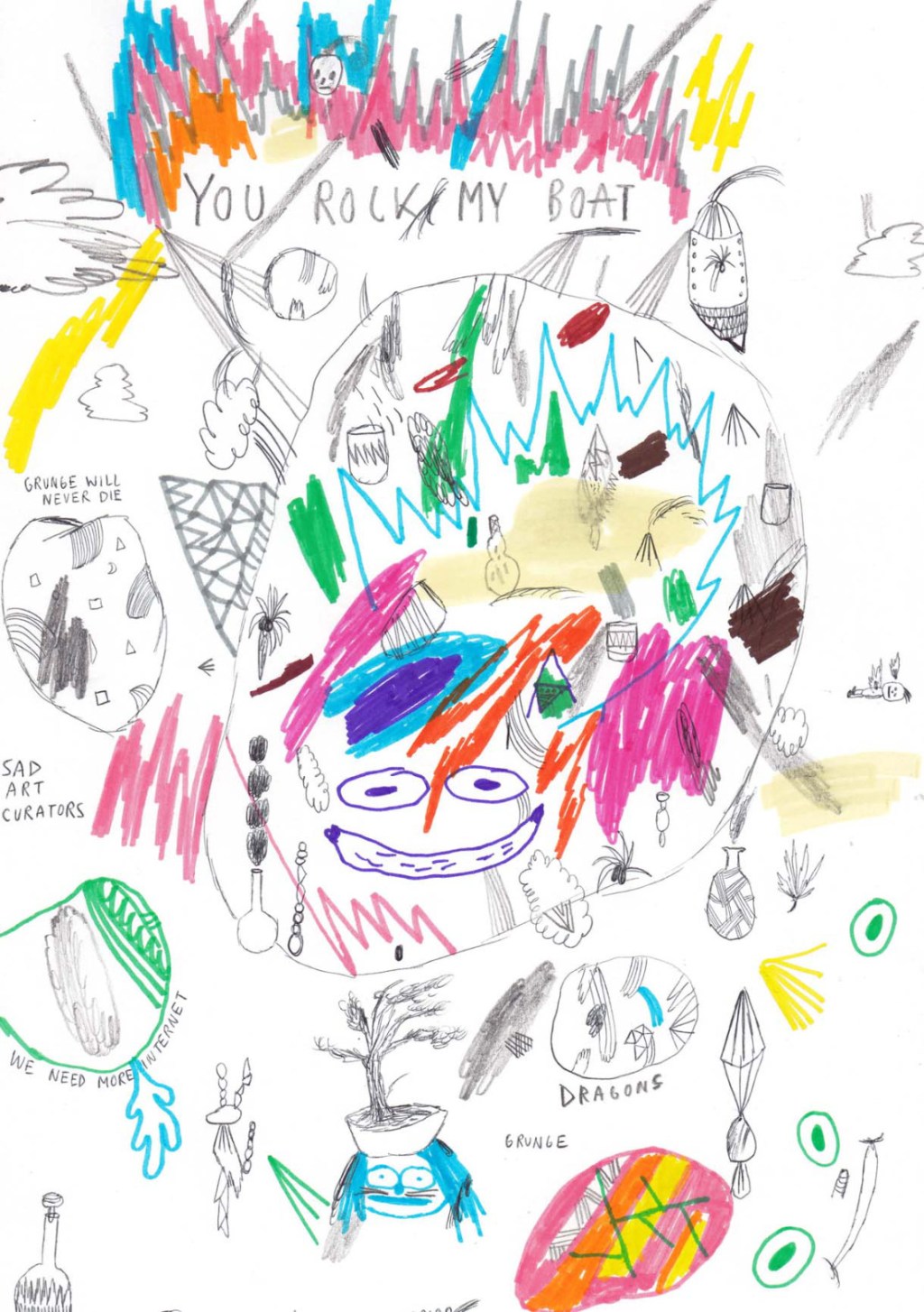
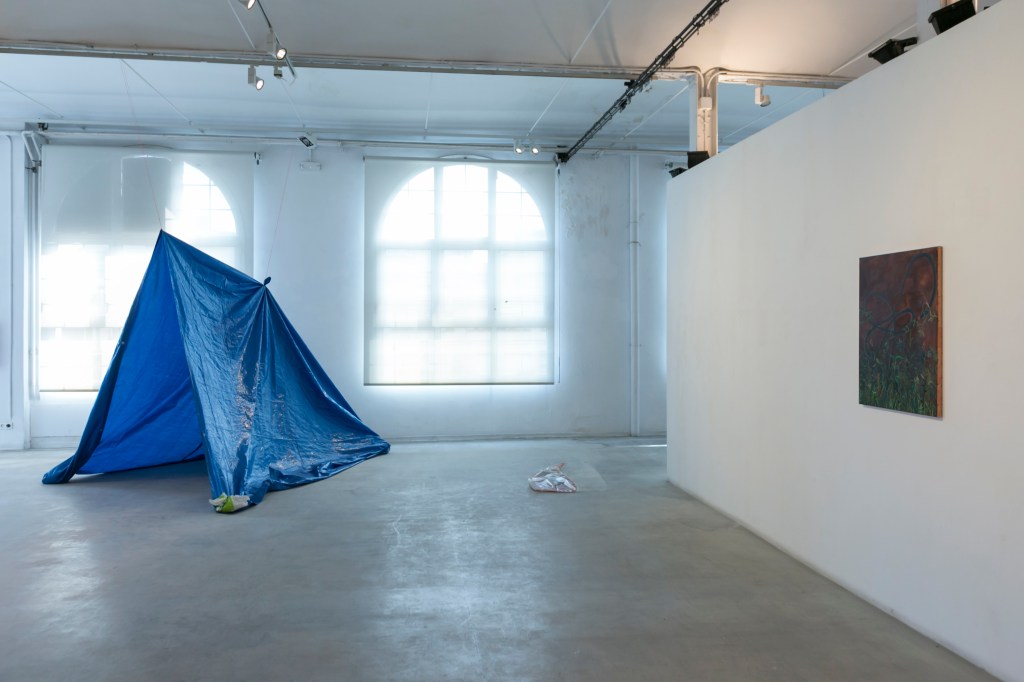
Memòria Química is a sculpture and a performance articulated as a single artistic device. The sculpture, built from PVC pipes and other synthetic materials, takes the form of a mobile scenographic structure inspired by the tradition of theatre curtains—a movable and adaptable element that absorbs and is shaped by the context in which it is installed. It brings together fabrics, drawings, and other materials produced during the research process, functioning as a container of memories, remnants, and records.
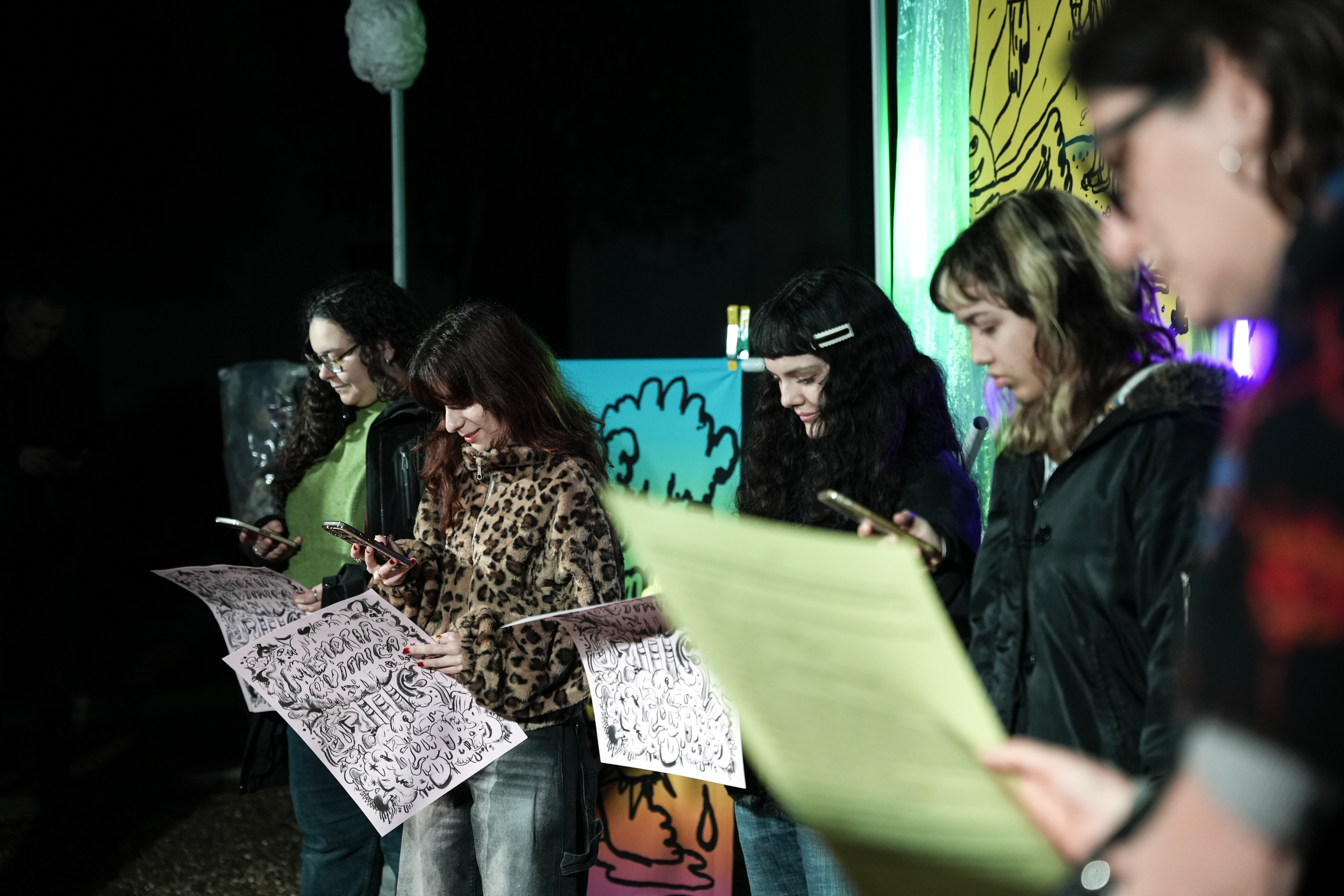
The performance activates the sculpture and transforms it into a living space. It is a participatory action based on an open script that invites the audience to give voice and body to a collective narrative. The text of the performance is constructed from historical, scientific, and personal fragments developed through a collaborative process with students from the Tarragona region, generating a palimpsest of voices and bodies that overlap and contaminate one another.
Chemistry is understood here as an expanded lens through which to read the territory: a prism that cuts across the economic, social, and ecological dimensions of the Camp de Tarragona. The region hosts one of the largest petrochemical complexes in southern Europe, an industrial infrastructure largely installed during the Franco dictatorship as part of a broader state-driven push toward heavy industry and developmentalism. Prior to this, the territory was already undergoing a process of modernization and industrialization through agriculture, at a moment when the so-called chemical revolution—fertilizers, pesticides, and new synthetic inputs—was beginning to reshape rural production and landscapes.
Memòria Química approaches this layered history as an open wound: the outcome of overlapping agricultural, industrial, and extractive processes unfolding over decades. Rather than offering a closed narrative or a univocal representation, the project proposes art as a space for activation, listening, and collective working-through of this inherited complexity, where economic progress, ecological transformation, and social memory remain deeply entangled.
Memòria Química és una escultura i una performance que s’articulen com un únic dispositiu artístic. L’escultura, construïda amb tubs de PVC i altres materials sintètics, adopta la forma d’una escenografia ambulant inspirada en la tradició de les cortines de teatre: un element mòbil i adaptable que s’impregna del context on s’instal·la. Aplega teles, dibuixos i altres materials produïts durant el procés de recerca, funcionant com un contenidor de memòries, restes i registres.
La performance activa l’escultura i la transforma en un espai viu. Es tracta d’una acció participativa basada en un guió obert que convida el públic a donar veu i cos a un relat col·lectiu. El text de la performance es construeix a partir de fragments històrics, científics i personals elaborats en un procés col·laboratiu amb alumnes del territori tarragoní, generant un palimpsest de veus i cossos que se superposen i es contaminen.
La química s’hi entén com una mirada ampliada per llegir el territori: un prisma que travessa les dimensions econòmica, social i ecològica del Camp de Tarragona. El territori acull un dels pols petroquímics més grans del sud d’Europa, una infraestructura industrial implantada majoritàriament durant el franquisme, en el marc d’una aposta estatal pel desenvolupament industrial pesant i la planificació centralitzada. Abans d’aquest procés, la regió ja havia iniciat una transformació orientada a la industrialització de l’agricultura, en un moment en què la denominada revolució química —fertilitzants, pesticides i nous inputs sintètics— començava a redefinir les pràctiques agrícoles i els paisatges rurals.
Memòria Química aborda aquesta història estratificada com una ferida oberta, resultat de dècades de processos agrícoles, industrials i extractius superposats. Més que proposar un relat tancat o una representació unívoca, el projecte entén l’art com un espai d’activació, escolta i elaboració col·lectiva d’aquesta complexitat heretada, on progrés econòmic, transformació ecològica i memòria social continuen profundament entrellaçats.







 Quim Packard